Customer’s Application
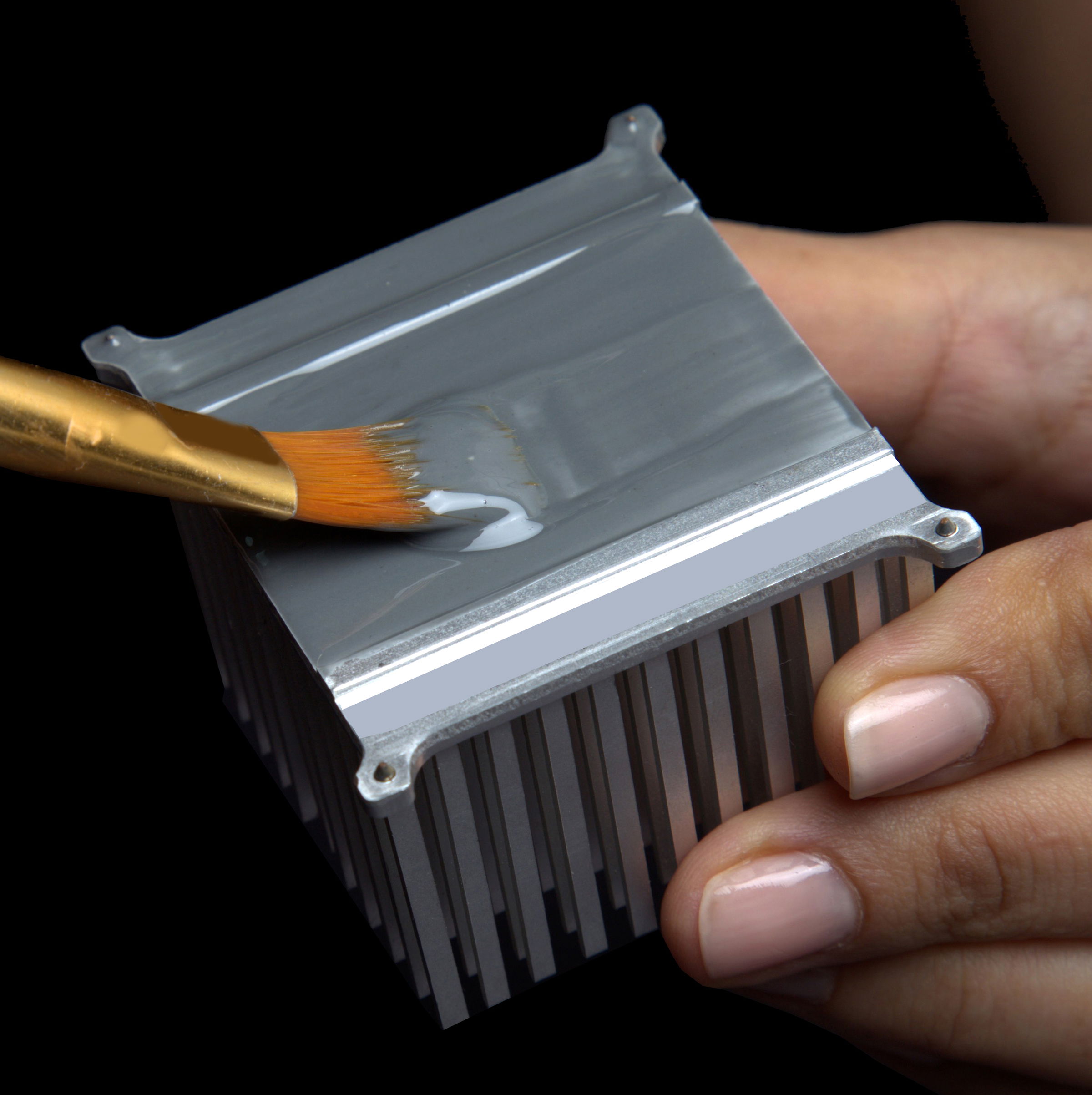
The customer requires an epoxy for bonding electronic components on a kapton pad to a heat sink. Superior heat transfer capabilities are of importance.Application Discussion
In order to recommend the right solution, our technical expert needs to find out answers to certain questions pertaining to the customer’s application: 1. What are the minimum and maximum temperatures that the adhesive will be exposed to? 2. Will you perform any thermal cycling tests? If yes, how many cycles, between what temperatures and what will the ramp speeds and dwell times be? 3. How much thermal conductivity is needed? 4. Does the adhesive need to pass NASA standards for low outgassing (ASTM E-595)?Product Recommendation
Based on answers to the above questions, Kohesi Bond’s technical expert recommended our product KB 1631 HTC-1. KB 1631 HTC-1 is a two component, room temperature curing epoxy system, that adheres superbly to polyimide (Kapton) film without any surface preparation. In addition to Kapton, this epoxy also offers excellent adhesion to metals, glass, ceramic and various other plastics. This phenomenal adhesive fosters outstanding physical strength properties and low coefficient of thermal expansion (CTE). It offers a sweeping serviceable temperature range of 4K (-269.15°C) to +200°C. This product can withstand severe thermal cycling and shocks even at cryogenic temperatures. KB 1631 HTC-1 also offers very good thermal conductivity (> 1.5 W/m/K) and it is capable of passing NASA standards for low outgassing (ASTM E-595). These properties make KB 1631 HTC-1 ideal for bonding flexible Kapton circuits being used in high vacuum environments. Our customer successfully tested KB 1631 HTC-1 in their application and got excellent results.
Utsav Shah is a 34-year-old entrepreneur with a passion for scientific discovery. Utsav’s journey began with a deep dive into materials science, earning degrees from USC and the Institute of Chemical Technology. He’s the visionary founder of Kohesi Bond, a top-rated adhesive manufacturer, and Cenerge Engineering Solutions, a leader in heat exchangers and cryogenic pumps. With over a decade of experience, Utsav consults across various industries, ensuring they have the perfect adhesive solution for their needs. Connect with him on LinkedIn!