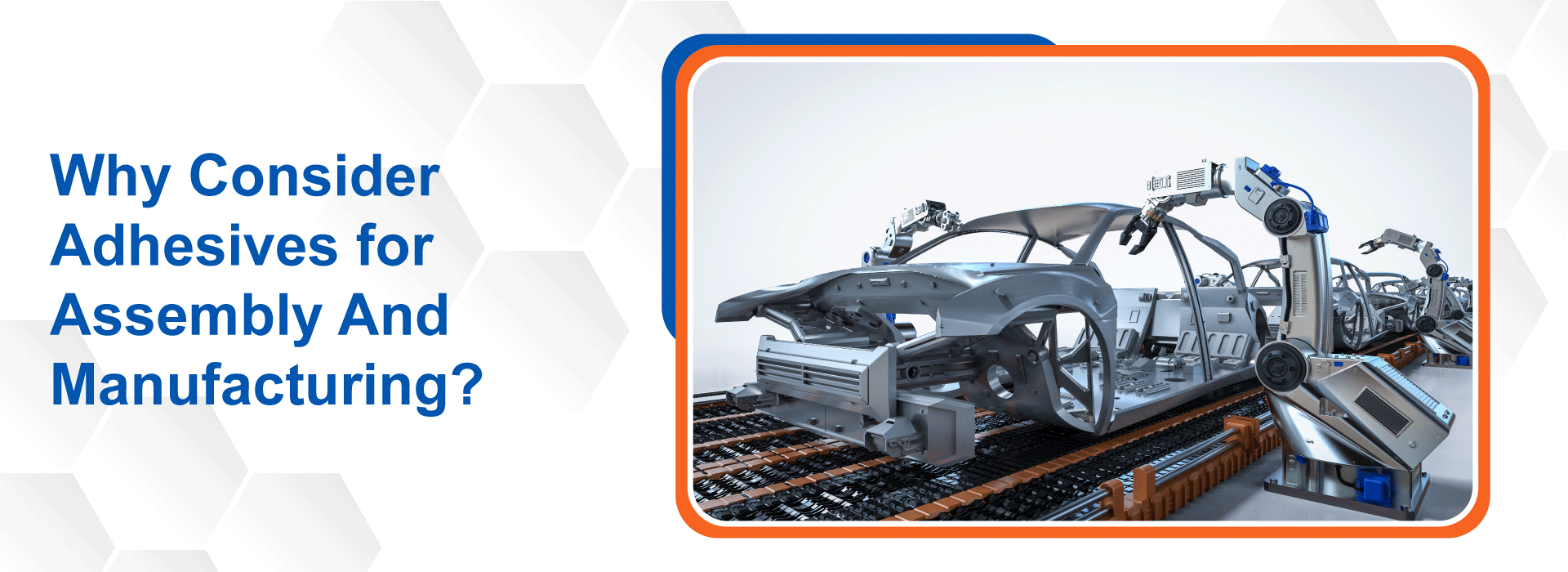
Did you know that adhesives are now used in over 75% of manufacturing processes worldwide? This shift is happening because adhesive applications offer unique advantages that traditional joining methods like bolts, screws, and welding can’t match. They provide strong bonds, improve efficiency, and help create lightweight, durable products.
In this blog, we will talk about why adhesives are becoming the go-to choice for manufacturers. We will cover the key benefits of using adhesives over mechanical fasteners, the types of epoxy adhesives commonly used, and why partnering with Kohesi Bond can give you the best solutions for your manufacturing needs.
A] 6 Reasons To Use Adhesive For Manufacturing And Assembly Over Mechanical Fasteners
Adhesives are becoming a go-to solution in modern manufacturing for good reason. They make the production process easier, faster, and more reliable while creating stronger, longer-lasting products. Here are some simple reasons why adhesives application is a great choice for assembly and manufacturing:
- Enhanced Strength and Durability: Adhesive assembly manufacturing creates strong bonds that spread the stress evenly across the surface, preventing weak spots. Unlike screws or bolts, which put pressure on just one area, adhesives can provide a uniform bond making the product stronger and less likely to fail. For products that face constant pressure or vibration, adhesives are incredibly reliable.
- Producing Lightweight Products: They help keep products light by eliminating the need for heavy fasteners. This is especially important in industries like automotive and aerospace, where lighter products lead to better fuel efficiency and performance. Adhesives also bond lighter materials like plastic and composites, making them perfect for today’s energy-efficient designs.
- Bond Dissimilar Substrates: Epoxy adhesives join materials with different properties, such as metals, plastics, glass, and composites, without causing damage or stress points. Unlike screws or rivets, which require holes that can weaken materials, adhesives create a seamless bond that distributes stress evenly.
- Optimized Production Speeds and Automation: They also help in speeding up production. Unlike mechanical fasteners, which require alignment and manual work, adhesives are easy to apply and fit well with automated production lines. Fast-curing adhesives cut down waiting time, helping manufacturers stay on track with tight schedules and improving overall efficiency.
- Improves Aesthetics: Adhesives leave no visible marks on the product, unlike screws or welding, which can be seen on the surface. This helps create cleaner, smoother designs that look better. It’s especially important in industries like electronics, where how the product looks is just as important as how it works.
- Protection Against Environmental Factors & Chemicals: Adhesives offer extra protection against moisture, temperature changes, corrosion, and chemicals. Mechanical fasteners can rust or loosen over time, but adhesives stay strong even in tough conditions. Our industrial adhesives are formulated to withstand oils, solvents, acids, and other harsh chemicals. This makes them ideal for products exposed to the outdoors or extreme environments.
- Less Wastage of Materials: With adhesives, there’s less waste. Mechanical fasteners often require drilling holes, which can weaken the material and leave scraps behind. Adhesives avoid this problem, letting manufacturers use materials more efficiently and cut down on waste.
B] Types Of Epoxy Adhesives Used In Product Assembly
Epoxy adhesives are highly versatile and can be customised to suit different manufacturing needs. Here are the main types of assembly glue used:
- Heat-Curing Epoxy Adhesives: These need heat to set and are great for high-performance tasks where strength is essential.
- Snap-Curing Epoxy Adhesives: These set quickly, making them perfect for fast-paced assembly lines where speed matters.
- Room-Temperature Curing Epoxy Adhesives: These don’t require heat to set, which makes them ideal for delicate materials or processes that save energy.
Popular Adhesives for Assembly And Manufacturing
KB 1031 ATHT-LO
KB 1031 ATHT-LO is a two-component toughened epoxy adhesive suitable for bonding, sealing and coating applications and has an outstanding strength profile. Read More
TUF 1820 AOHT
TUF 1820 AOHT is a single-component epoxy system that offers an unlimited working life at room temperature. It offers excellent thermal conductivity, mechanical strength, and dimensional stability. It is also suitable for bonding products used in cryogenic conditions. Read More
TUF 1828 TC
TUF 1828 TC is a toughened, single-component, thermal management epoxy system. It has unrivalled heat transfer efficiency and superb mechanical strength, making it ideal for bonding and sealing applications in aerospace and specialty OEM industries. Read More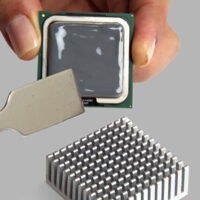
KB 1031 AT-2LO
KB 1031 AT-2LO is a two-component epoxy system suitable for bonding, sealing, potting and encapsulation. It offers an extensive serviceable temperature range of 4K (-269.15°C) to +120°C. It is widely used in electronics component manufacturing. Read More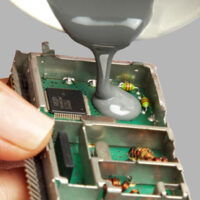

Utsav Shah is a 34-year-old entrepreneur with a passion for scientific discovery. Utsav’s journey began with a deep dive into materials science, earning degrees from USC and the Institute of Chemical Technology. He’s the visionary founder of Kohesi Bond, a top-rated adhesive manufacturer, and Cenerge Engineering Solutions, a leader in heat exchangers and cryogenic pumps. With over a decade of experience, Utsav consults across various industries, ensuring they have the perfect adhesive solution for their needs. Connect with him on LinkedIn!